


Mary, Mary, quite contrary,
How does your garden grow?
With Silver Bells, And Cockle Shells,
And so my garden grows.
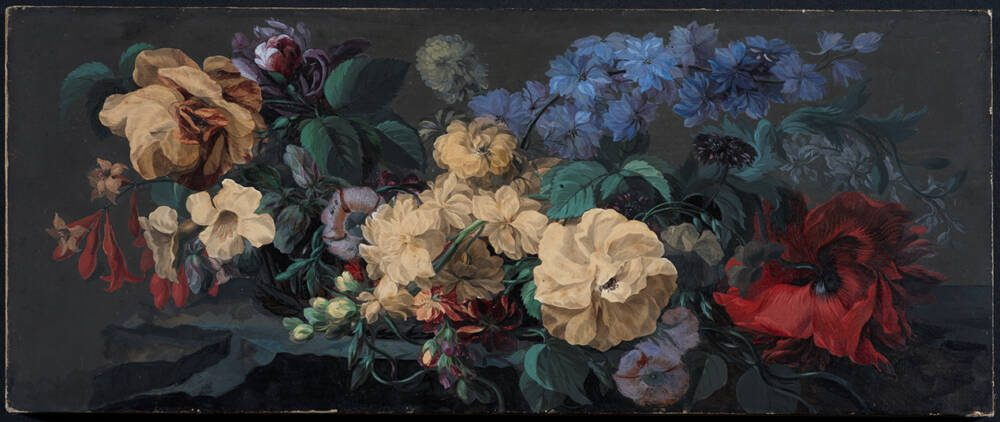
The tradition of floral still life painting inevitably conjures the Dutch Baroque masters—those sumptuous arrangements of tulips, roses and the like captured at the precipice of decay. Such discussions inevitably evoke the names of the canonized masters: Ambrosius Bosschaert the Elder, Jan Davidsz de Heem and the acclaimed female painter Rachel Ruysch. Yet there is a lesser-known 18th-century English artist who deserves reconsideration alongside such celebrated names: Mary Moser, RA (1744–1819), whose vibrant compositions rivaled the technical prowess of her continental predecessors while carving a distinctive path as one of only two women among the founding members of the Royal Academy of Arts.
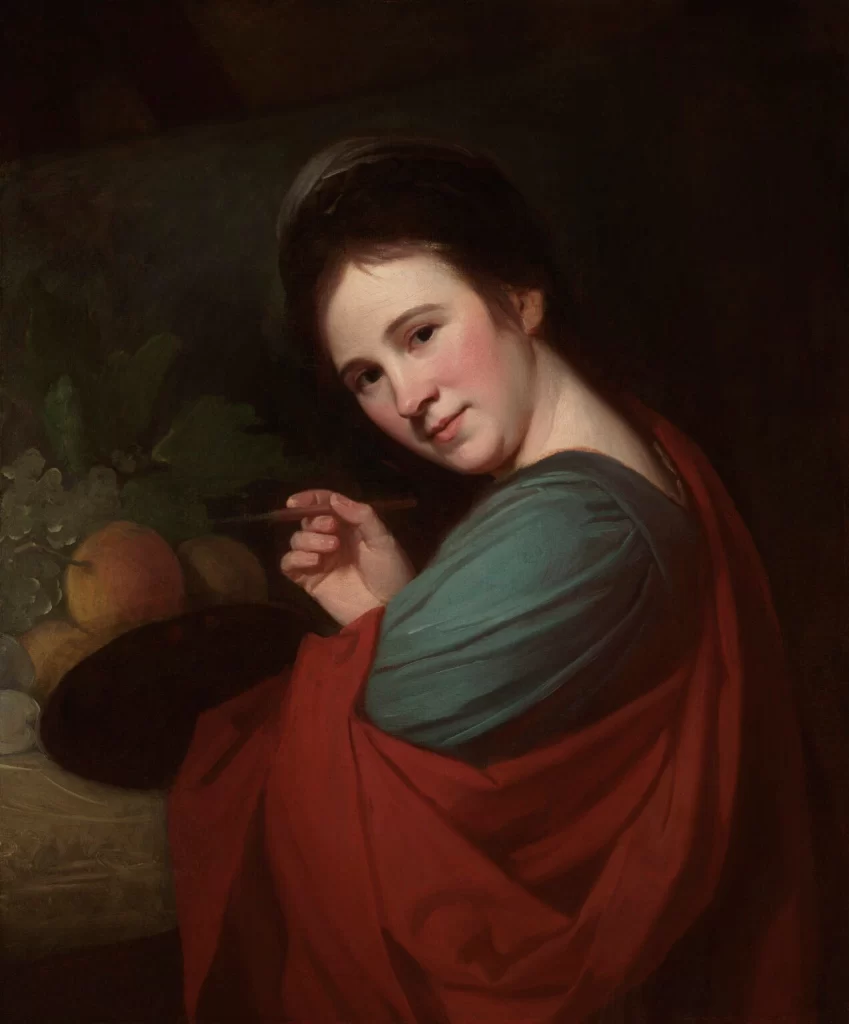
Born in London to George Michael Moser, a Swiss-born enameler and drawing master to King George III, from whom Mary received rigorous artistic training from childhood—a typical source of tutelage for woman artists of her time. Her work reveals clear affinities with the Dutch tradition, particularly the elaborate bouquets and dramatic lighting effects associated with Ruysch and van Huysum. But where those artists often infused their arrangements with memento mori symbolism, Moser’s paintings pulse with a celebration of botanical abundance.
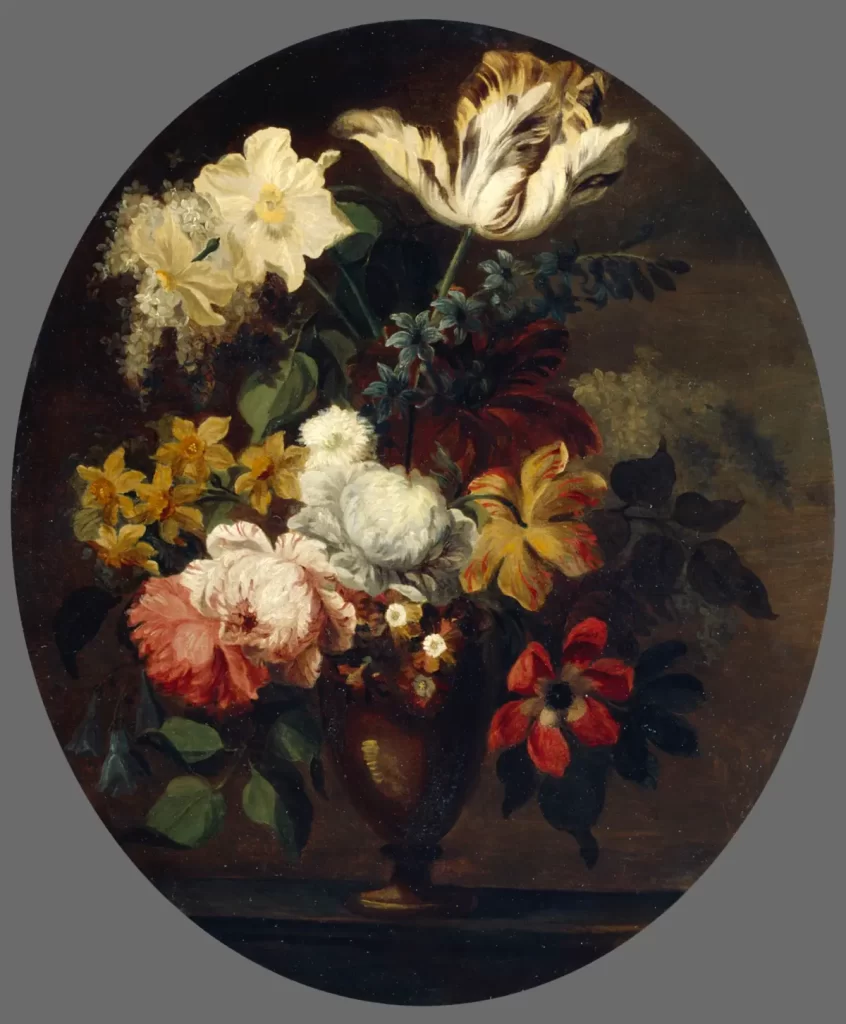
The historical context for Moser’s work proves fertile ground. Still life painting flourished during a period of intense fascination with natural science and, perhaps more significantly for the English sensibility, innovations in garden design. Lancelot “Capability” Brown was transforming the cultivated British landscape, replacing geometric formality with naturalistic sweeps of rolling lawns and serpentine paths creating the illusion of the untouched picturesque. Moser’s paintings translated this horticultural enthusiasm for fashionable interiors, most spectacularly in her commission from Queen Charlotte to decorate a room at Frogmore House, the Queen’s country retreat near Windsor. Queen Charlotte envisioned “an arbour open to the skies,” and Moser responded with a harmonious integration of canvases depicting flowers culled from the Queen’s own botanical collection. The room achieves a delicate balance between Neoclassical architectural restraint and the exuberant profusion of painted blooms—a visual translation of the period’s landscape revolution brought indoors.
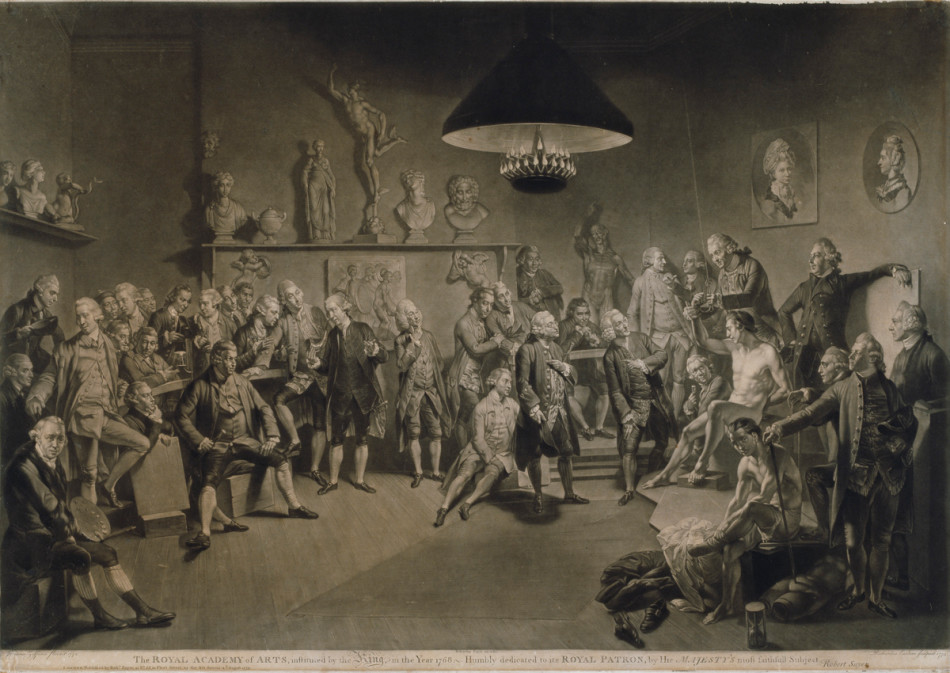
Moser’s achievement must be understood within the constraints she navigated. Along with celebrated History Painter Angelica Kauffman, they represented two female among the 34 male founding members of the Royal Academy in 1768—a remarkable distinction that nonetheless came with significant limitations. Both women were barred from life drawing classes featuring nude models, training deemed essential for mastering human anatomy but quite improper for a lady to attend. Social propriety also excluded them from attending committee meetings and official Academy dinners with their colleagues.
Their marginalized status was famously reflected in Johann Zoffany’s painting The Academicians of the Royal Academy, where Moser and Kauffman appear not seated among the members but as portraits hanging on the back wall—an artistic nod to their peripheral roles despite their status as founding members. The genre of “still life” may have additionally hindered her acceptance to the loftier levels of her peers. Moser’s primary domain of flower painting, languished in the lower echelons of the academic hierarchy championed by founding president Sir Joshua Reynolds, as it did in the continental academies of Europe. That the Academy admitted no other female member until Dame Laura Knight in 1936 underscores both the exceptionalism of Moser and Kauffmann’s achievement and the institution’s resistance to challenging its gendered foundations.
Beyond the painted surface, Moser served as royal drawing teacher and active participant in London’s artistic circles. While she occasionally ventured into portraiture and narrative work, her legacy resides in those dramatic floral compositions—cascading arrangements that capture the ephemeral beauty of gardens with meticulous precision. The decorative scheme at Frogmore House endures as her most ambitious work, a synthesis of artistic mastery and the distinctly English preoccupation with cultivated nature. In navigating the strictures imposed upon her, Moser demonstrated not the contrariness of her nursery rhyme counterpart, but a persistent determination that allowed her extraordinary talent to flourish.
Featured images:
- Portrait of Mary Moser RA, by George Romney, c. 1770
- Spring, Mary Moser RA, c. 1780, ~25 x 20 inches
- Mezzotint reproduction by Richard Earlom of Johann Zoffany’s Portrait of the Founding Members of the British Royal Academy.